Stepping Back in Time
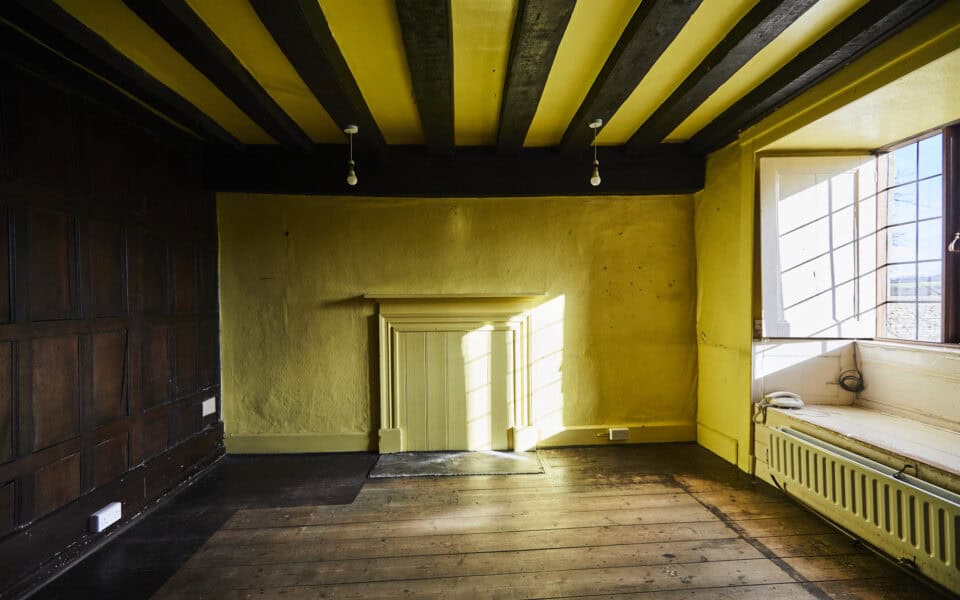
Every building carries its history in its fabric. Stone, timber, plaster and paint record how a house was built, and how it has been lived in, altered and cared for ever since.
Our role is to maintain and improve that fabric. We plan the work that keeps a house sound, manage the projects that adapt it to the way its owners live now, and look ahead to what it will need next.
Yet on occasion, the work lets us step back in time.
A ceiling comes down and reveals beams hidden for a century. A wall is opened to show a doorway long since blocked. Paint on an old door records each owner’s taste in turn, while the filled holes of earlier handles sit beside the ones in use today. A fireplace, boarded in when central heating arrived, still holds its original surround. And in an attic untouched for decades, the plaster and glass are much as the builders left them.
Together they tell a story of adaptation. Houses change with the people who live in them. Rooms are divided, then opened up. Windows are enlarged for light or closed for economy. Panelling is painted, stripped and painted again. Each change reflects the needs or tastes of its time.
Understanding that history makes us better at what we do. Knowing what is original and what came later tells us how a building behaves, which materials suit it, and where a change calls for consent, specialist advice or simple restraint. It helps us decide what to repair, what to reveal and what to leave alone.
It also brings a responsibility. When something of the past comes to light, there is value in documenting it. A photograph, a note or a record of what was found can help preserve that knowledge long after the work itself is complete. For whoever cares for the house next, that record becomes another part of the building’s story.